At the heart of our residences lies a deep commitment to beauty, culture, and craftsmanship. Every detail has been curated with historical reverence and artistic passion, from frescoes to Murano chandeliers, to the very names of our rooms.
Explore
The Frescos
The frescos painted in the Salotto are reproductions of prints done by Giuseppe Zocchi of Florentine vistas and
villas, commissioned to him by Andrea Gerini in 1744. These reproductions are part of a project to bring
back the antique techniques used during the Renaissance period by fresco painters. The project started in the
early 2022 with Maestro Silvestro Pistolesi, one of the pupils of the famous painter Pietro Annigoni, and three
architects: Jose Cornelio da Silva, James Larew and Fernando Gandara. The first frescos were finished by the end
of February 2022, and where halted due to the passing of Maestro Pistolesi.
In February of 2024, another
pupil of Pietro Annigoni, Maestro Massimo Callossi, was inspired to continue the project, with the same team of
architects working like an old Florentine “Bottega”. The Salotto is now nearly completed with additional 4 frescos
and will continue in the years ahead.
The Artistic Process Behind Our Wall Paintings
1
Preparing the walls with “gesso a oro”, necessary to improve smoothness and absorption properties of the wall.
2
Designing and framing for the paintings and the decorations.
3
Preparing the drawings and transferring them to walls.
4
After removing the canvas the dots can be joined where necessary and the painting can start.
5
Two types of paint where used:
-
Water based acrylic colours -> Used by Maestro Pistolesi.
-
Egg-yoke and white vinegar based powdered colours -> Used by Maestro Callossi.
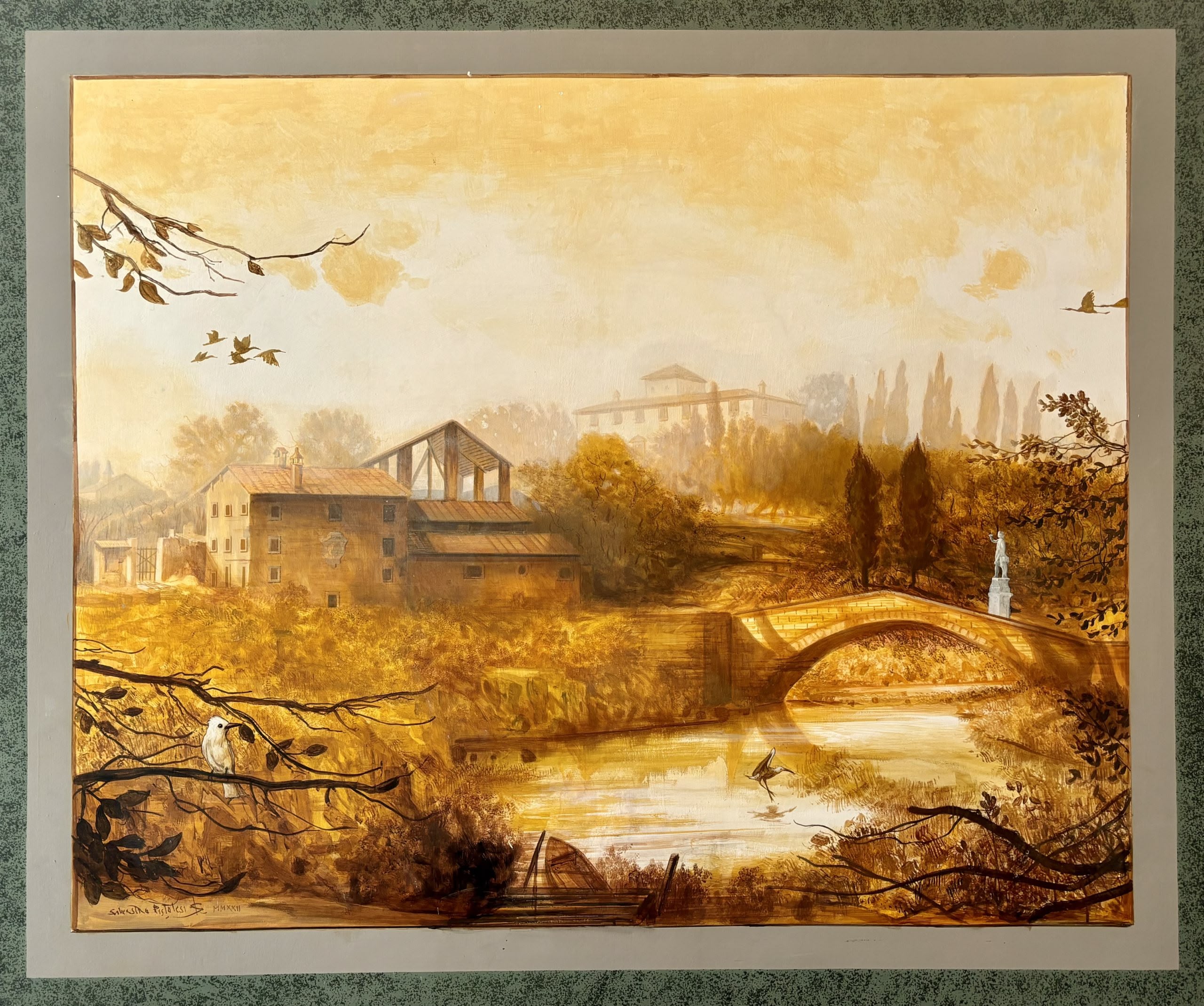
Maestro Pistolesi
Veduta di Villa Mancini sull’Arno
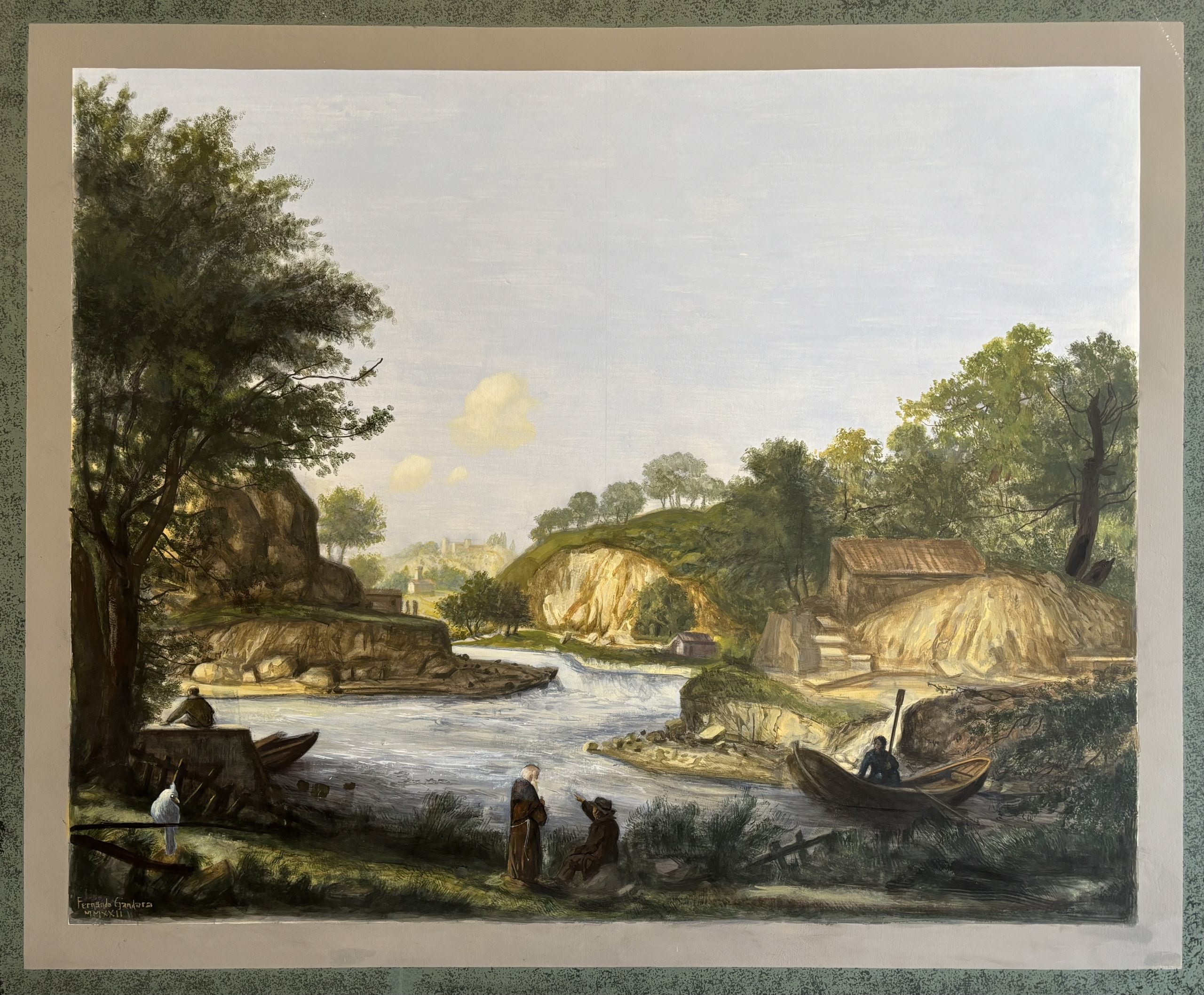
Arch. Gandara
Veduta dell’Arno nei pressi di Grumaggio
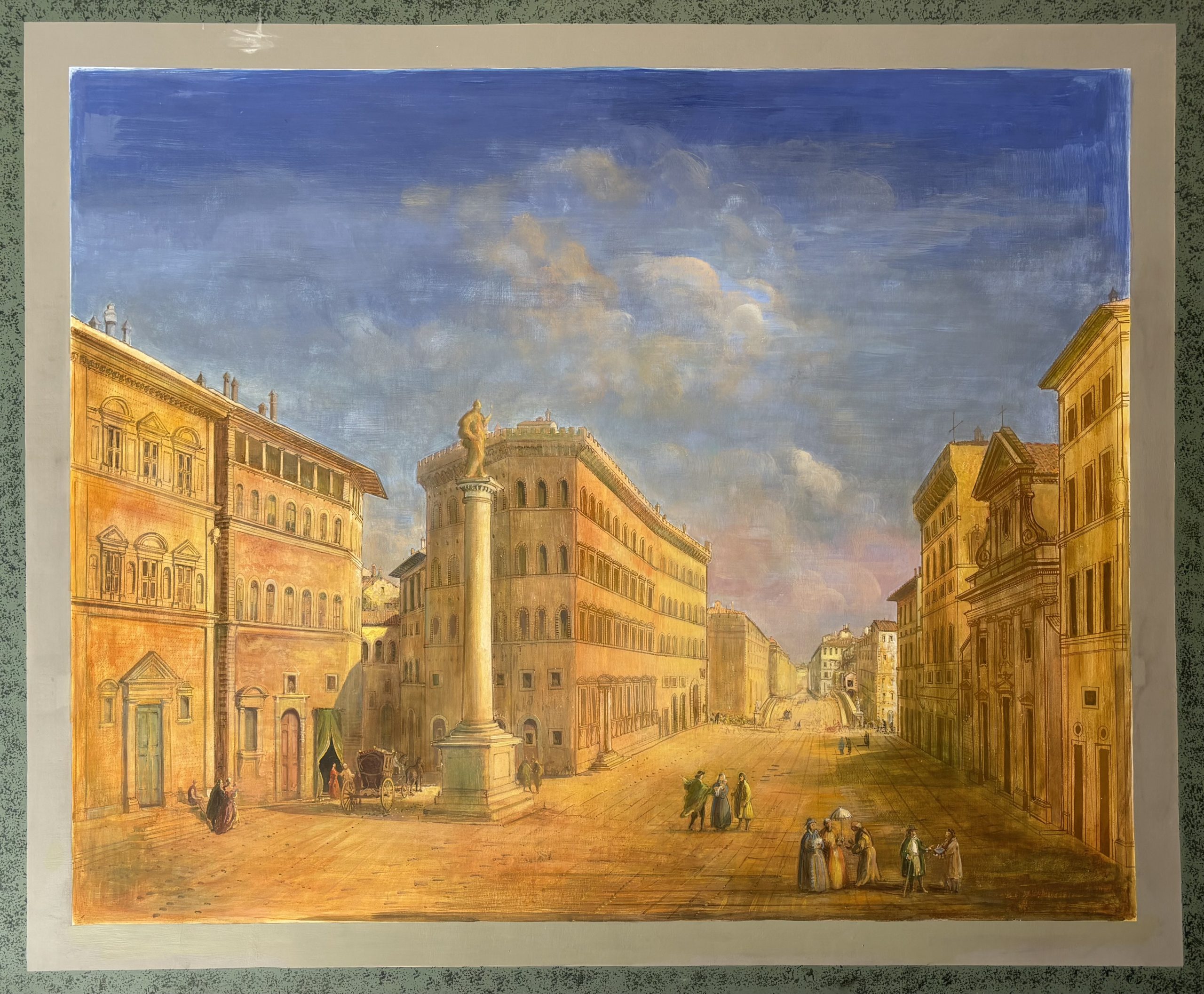
Arch. Larew
Veduta di Piazza Santa Trinita
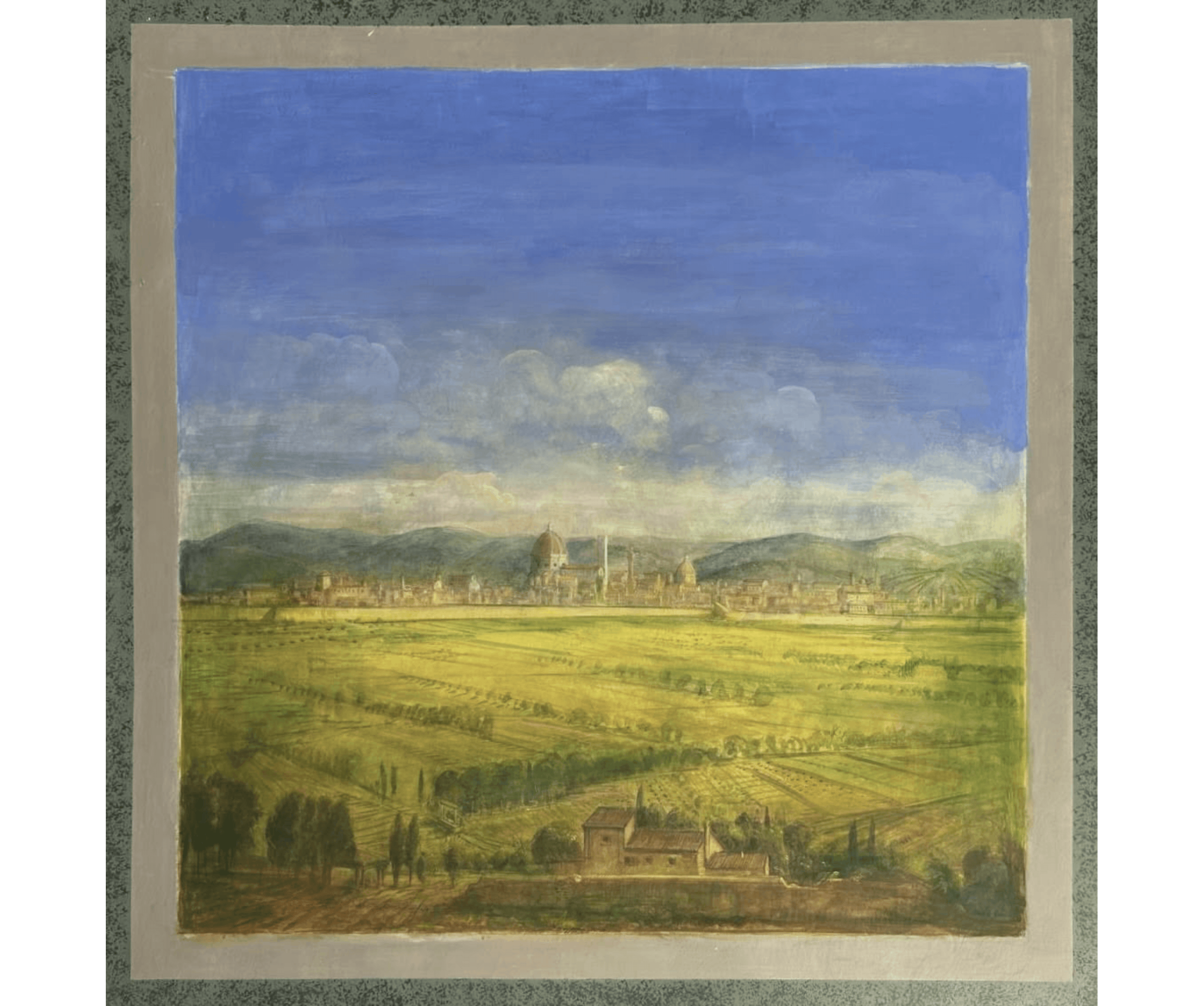
Arch. Gandara
Veduta di Firenze da Montughi
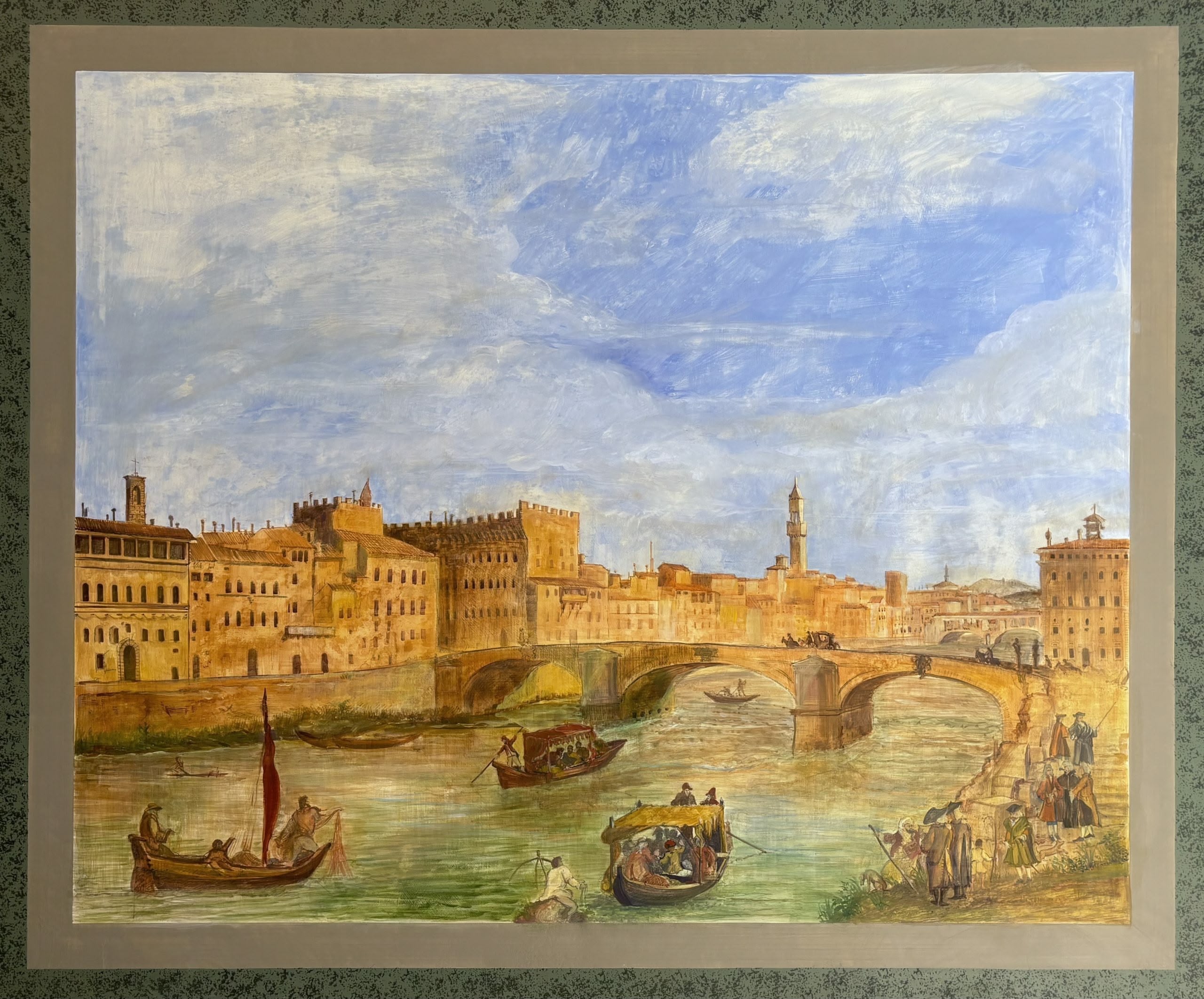
Arch. Cornelio da Silva
Veduta del Ponte Santa Trinita
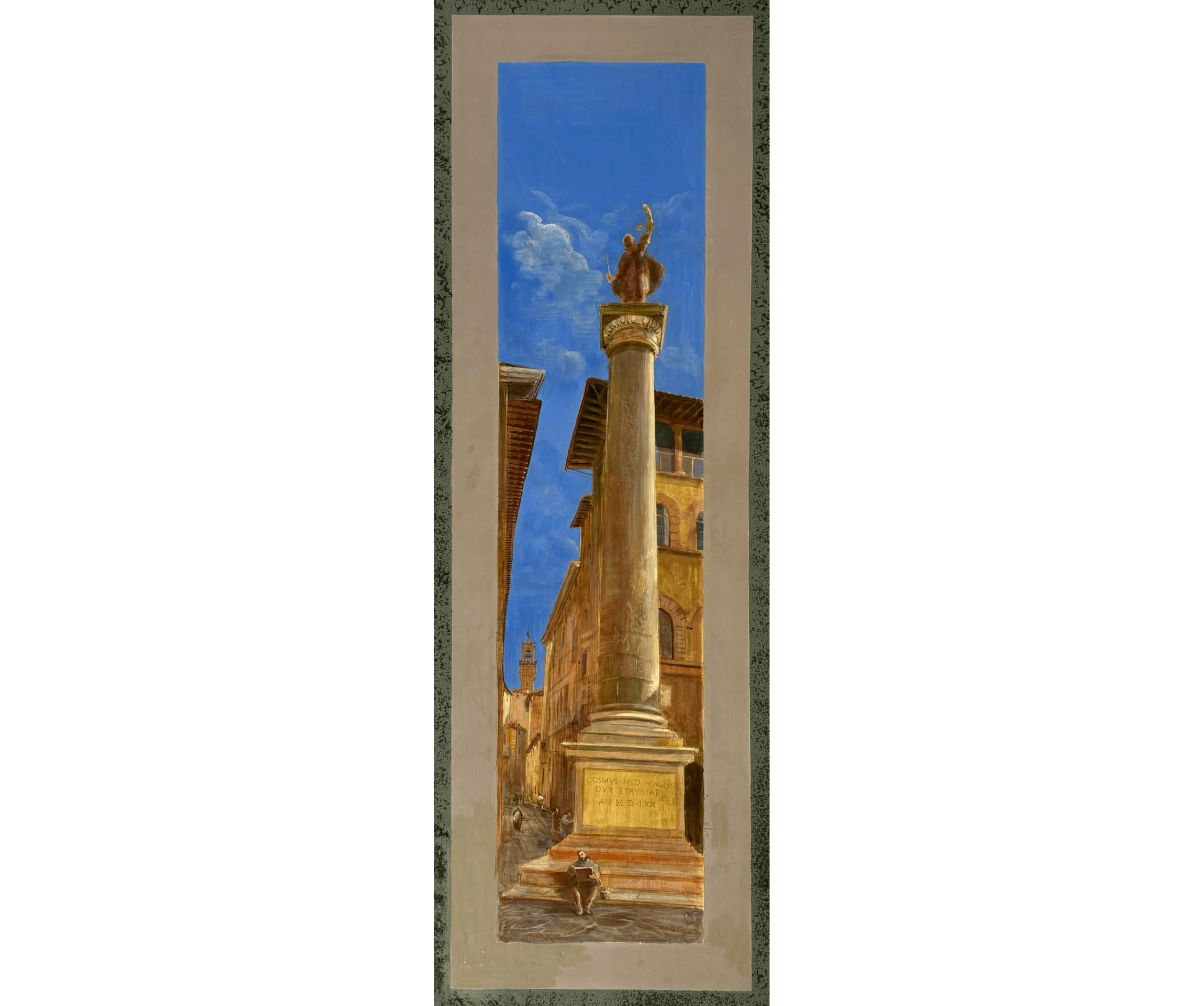
M° Callossi
Veduta della Colonna della Giustizia
Murano Chandeliers
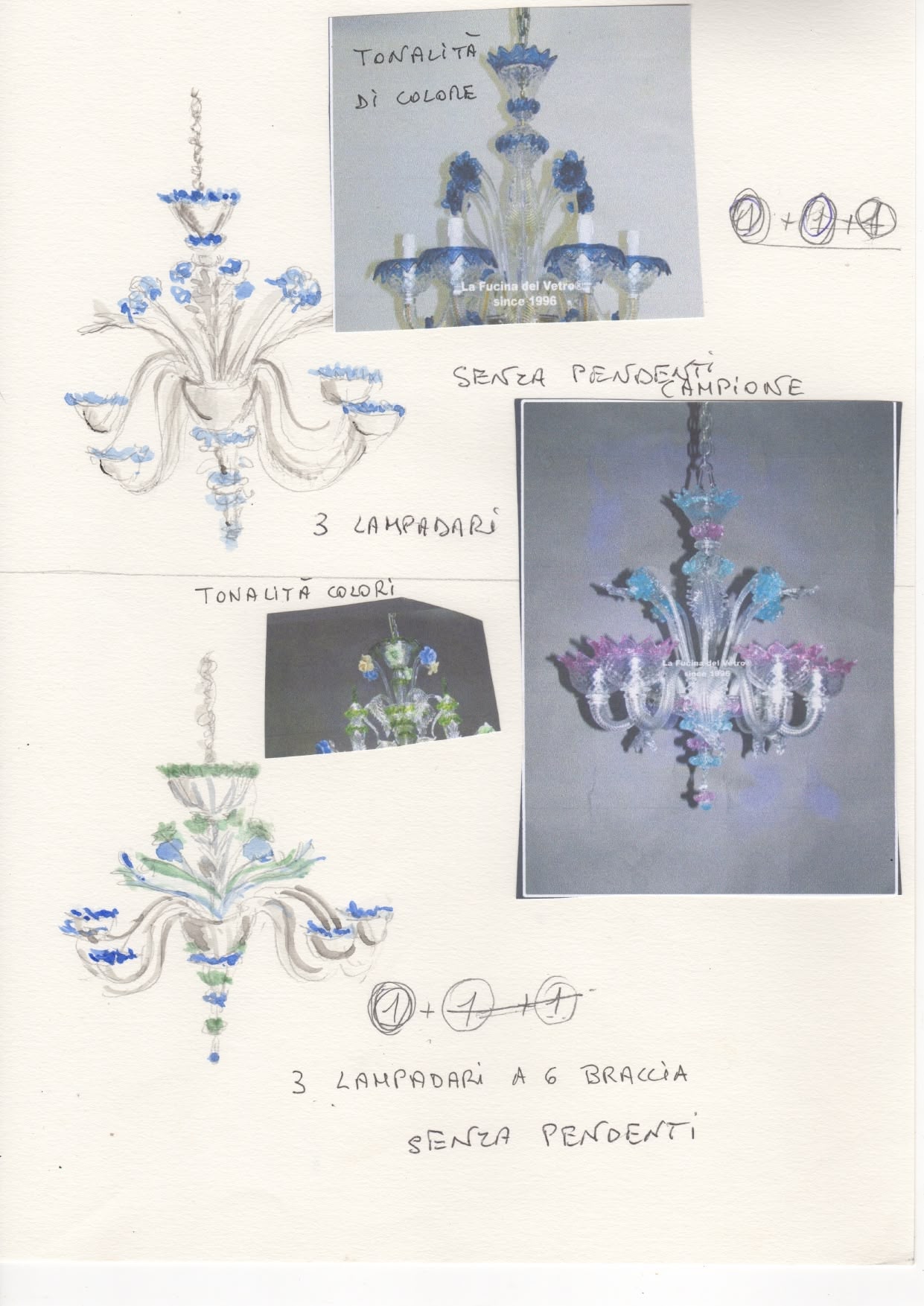
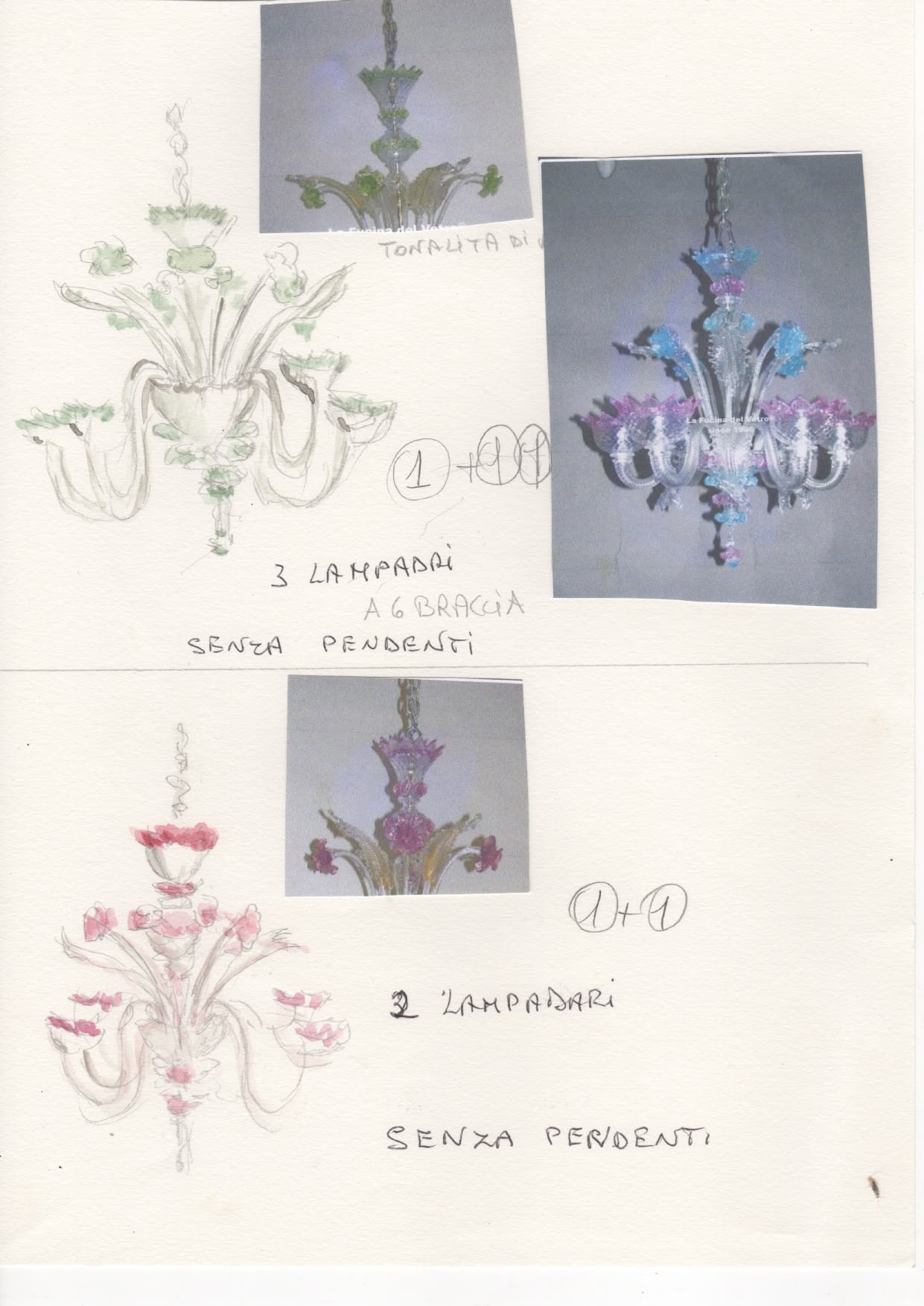
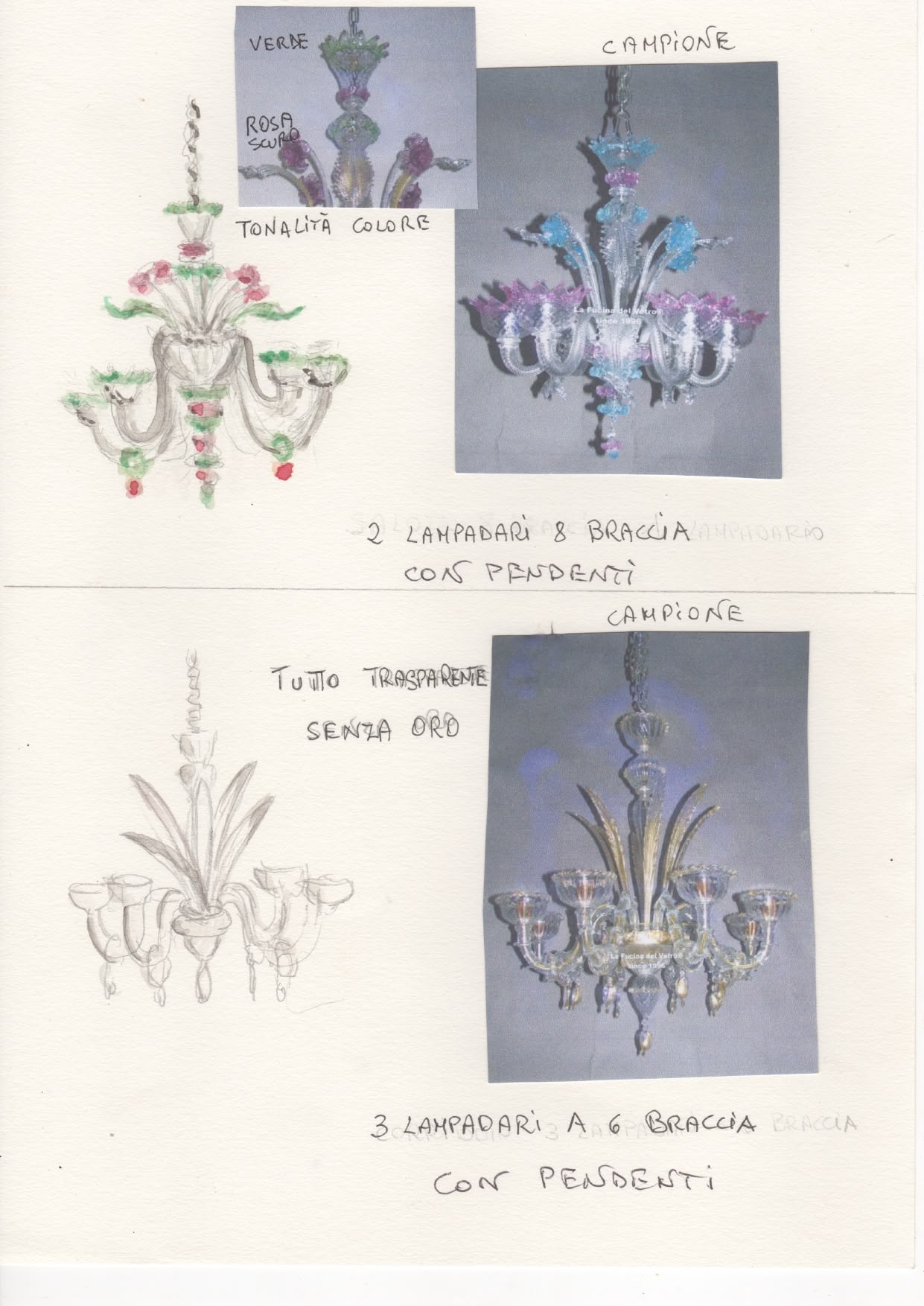
Each chandelier is the result of a meticulous creative journey carried out in collaboration with La Fucina del Vetro, master glassmakers renowned for their craftsmanship. The process begins with the concept, followed by the drawing phase where designs are refined, and culminates in the manufacture of each unique piece. The result is a harmonious blend of artistry and technique, bringing timeless elegance to every space.
The Names
Lucrezia
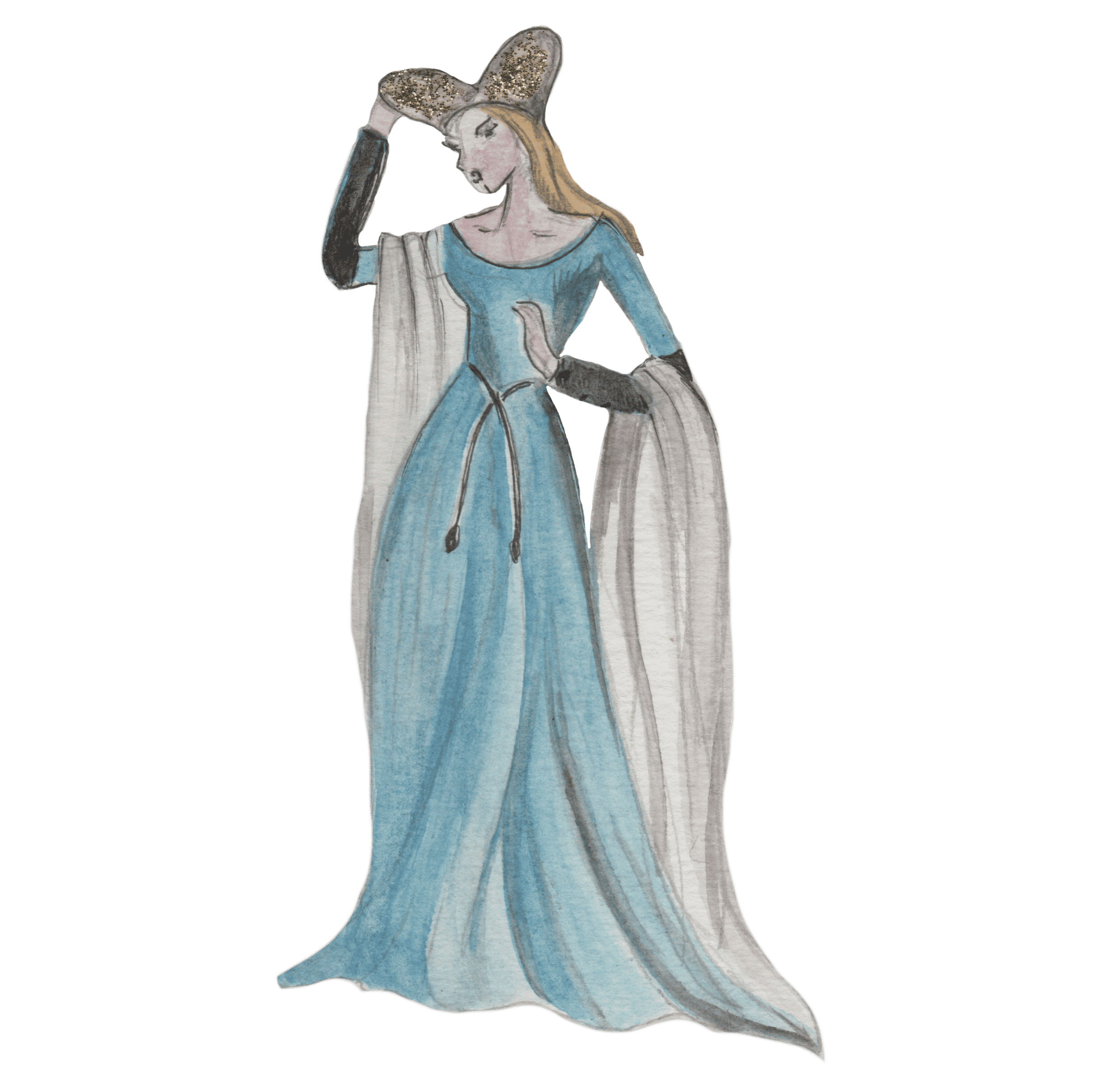
Lucrezia Borgia, born in Subiaco on April 18, 1480, was the illegitimate daughter of Pope Alexander VI and his mistress Vannozza Cattanei. She was one of the most controversial female figures of the Renaissance. She first married Giovanni Sforza, but the marriage was annulled, and she later married Alfonso of Aragon, who was assassinated. After a brief mourning period, she married Alfonso d’Este. Lucrezia died in Ferrara in 1519 and is buried in the Monastery of Corpus Domini.
Isabella
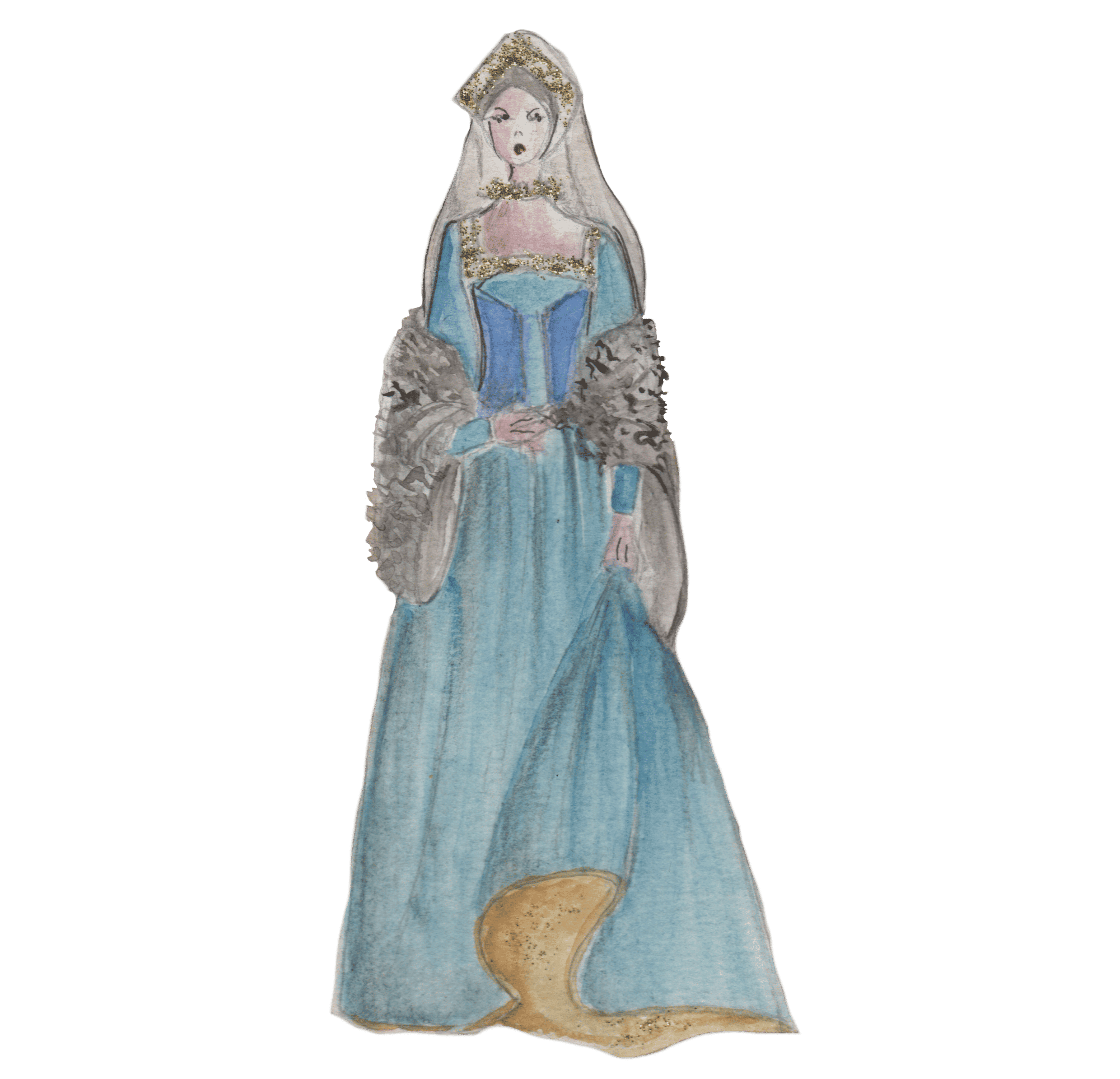
Isabella Borgia was born on January 5, 1498, in Gandia, Spain. She was the daughter of Giovanni Borgia II, Duke of Gandia-illegitimate son of Pope Alexander VI-and Maria Enriquez de Luna. Isabella died in Valladolid on October 28, 1567, and was buried in the Convent of San Francisco in Valladolid.
Ginevra
Ginevra de’ Medici was born on December 20, 1479, in Florence. She was the daughter of Lorenzo il Popolano de’ Medici and Semiramide d’Appiano d’Aragona. She married Giovanni degli Albizzi, a member of a family historically opposed to the Medici. The couple had four children, one of whom, Francesco degli Albizzi, became a Canon of the Cathedral of Florence and also served as a chamberlain to Pope Paul III. Ginevra died in Florence on January 1, 1527.
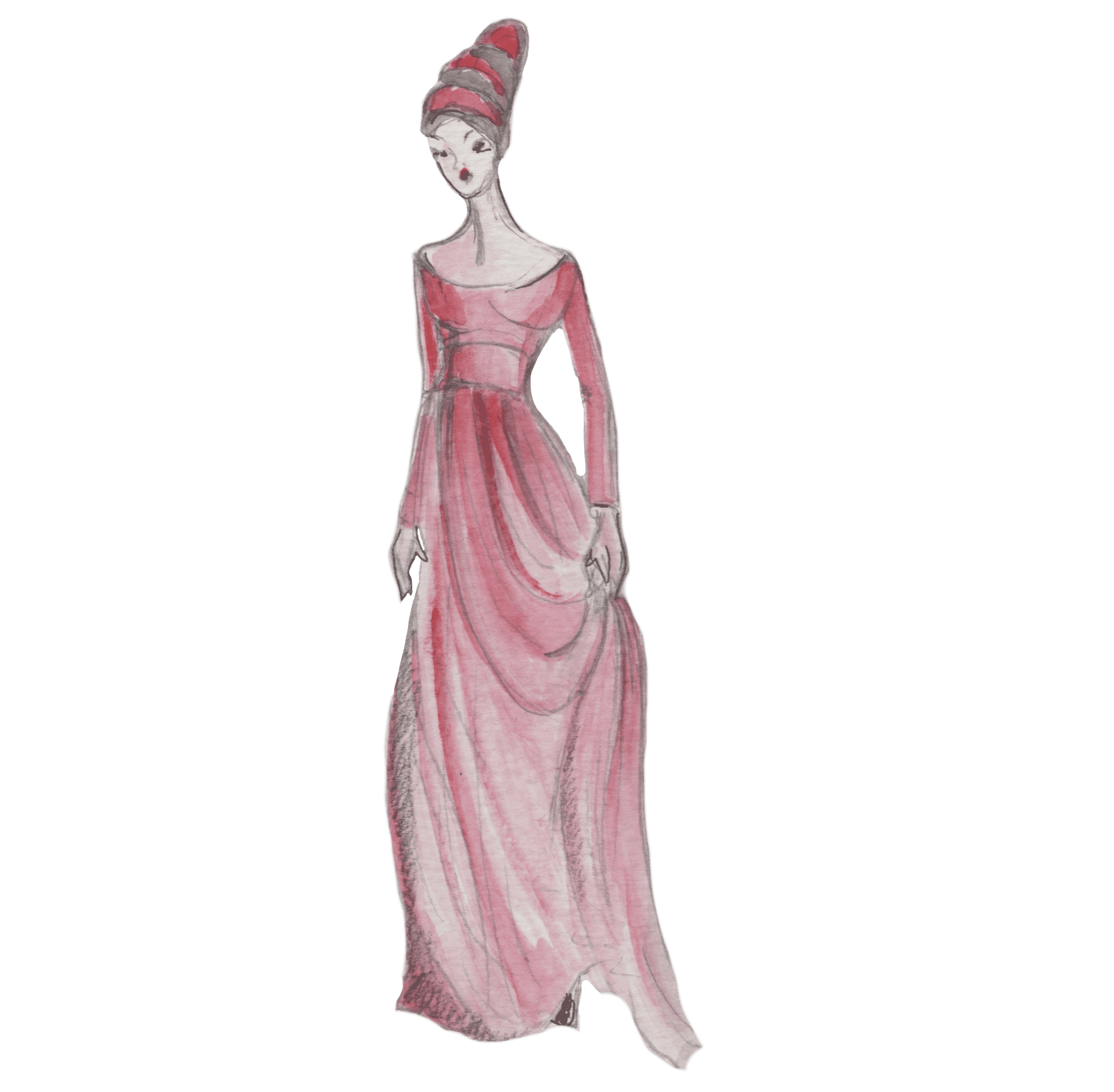
Olimpia
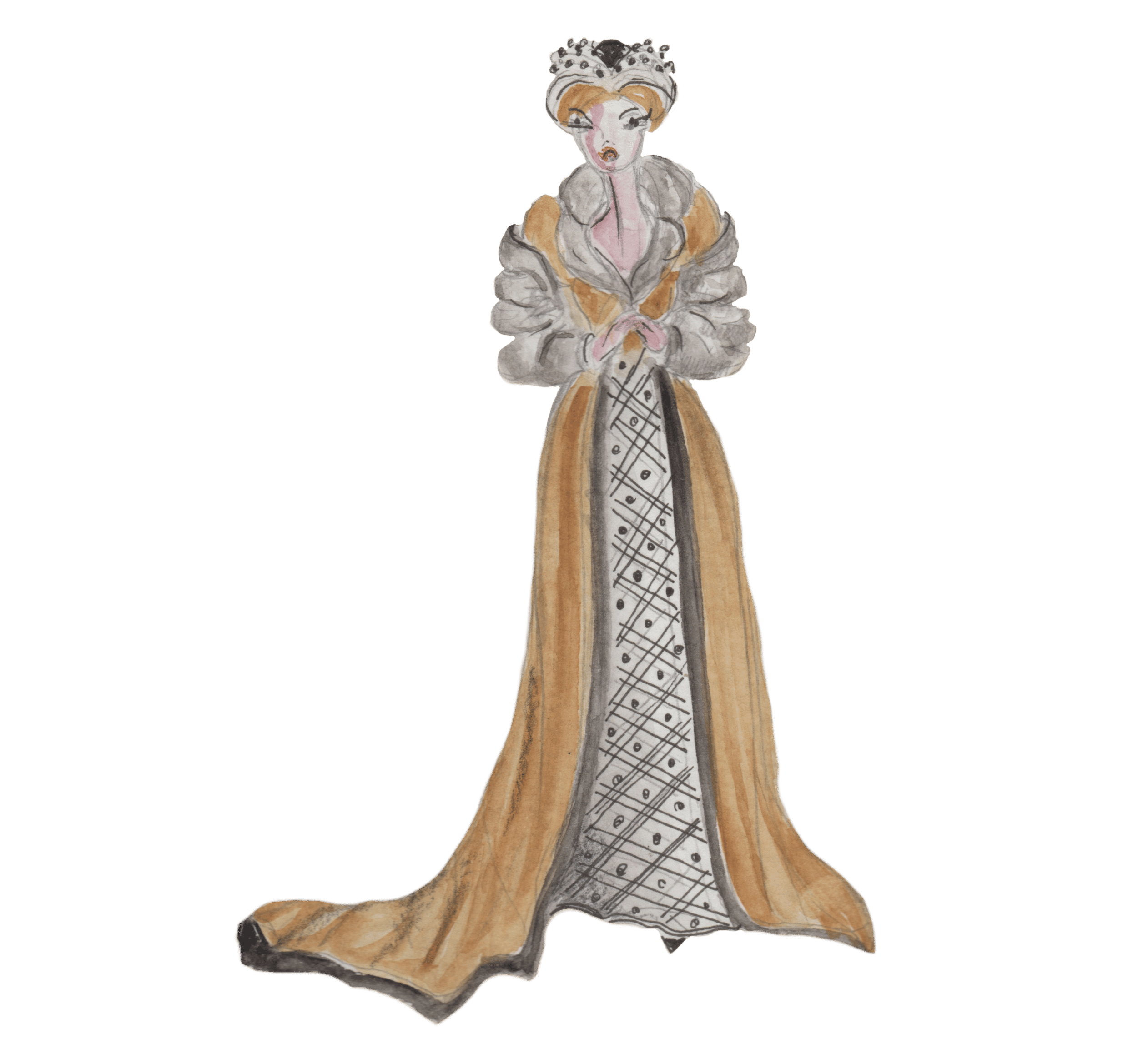
Olimpia Gonzaga was born on September 1, 1591, in Castiglione delle Stiviere (Province of Mantua). She was a
religious figure and founder of the Congregation of the Sisters of Jesus. Daughter of Rodolfo Gonzaga and Elena
Aliprandi-herself the daughter of Giovanni Antonio, a wealthy banker in the service of the Gonzaga family-Olimpia
was entrusted to the care of her uncle, Francesco Gonzaga, after her father was assassinated. She spent several
years in the Monastery of Saint Ursula in Mantua, where she expressed her desire to take religious vows. Olimpia
died on December 23, 1645, and her body was placed in a glass shrine alongside her sister Gridonia in the Basilica
of Saint Aloysius Gonzaga in Castiglione delle Stiviere (Mantua).
Virginia
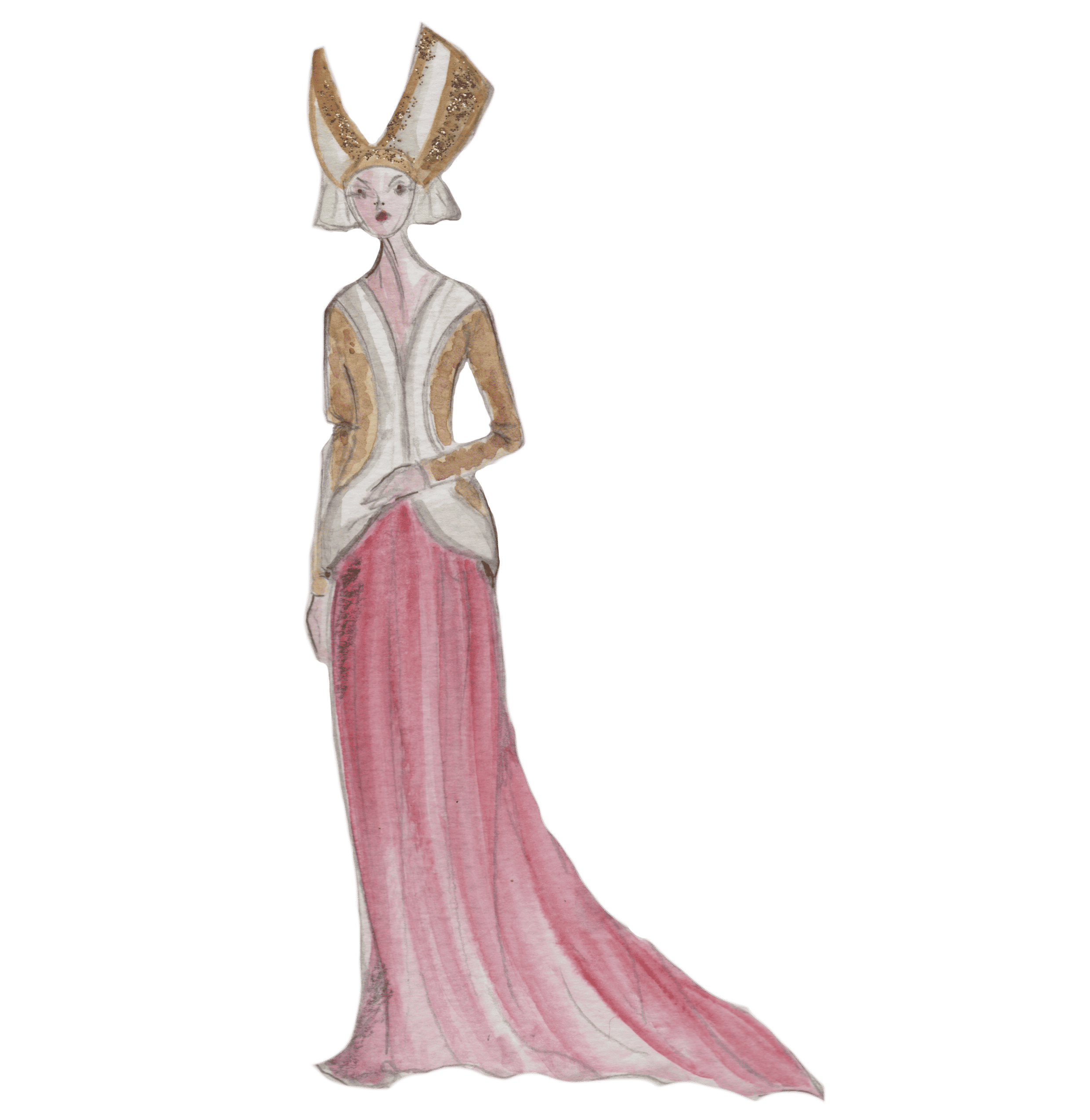
Virginia de’ Medici, Duchess of Modena and Reggio, was born on May 28, 1568, in Florence. She was the daughter of Grand Duke Cosimo I de’ Medici and Camilla Martelli. She was initially betrothed to Count Francesco Sforza of Santa Fiora, but the negotiations failed, and on February 6, 1586, she married Duke Cesare d’Este. She lived in Ferrara, and after ten years of marriage, she began to show the first signs of mental illness, which accompanied her until her death in 1615. She was buried in Modena in the Church of San Vincenzo.
Ortensia
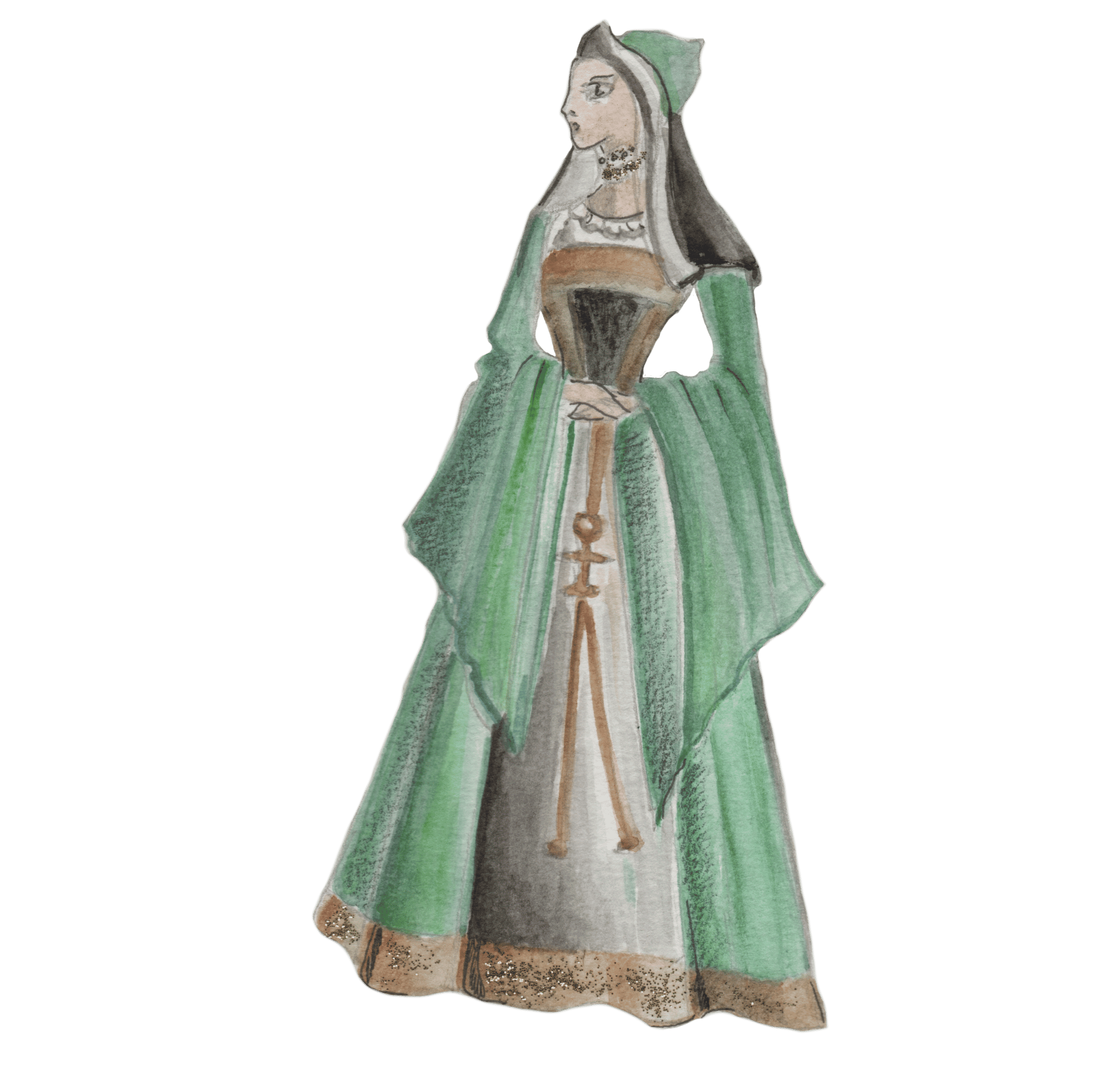
Ortensia Farnese Sforza was a prominent noblewoman, daughter of Beatrice Farnese and Antonio Baglioni of Siena. In
1531, she married Ercole Sforza Marescotti, a counselor in the service of Pope Paul III. Through her
mother’s will, she inherited the Castle of Vignanello, one of the most beautiful castles north of Rome,
which she transformed into an important cultural center. Her husband Sforza was assassinated, and after becoming a
widow, she married Ranuccio Baglioni in May 1549-he too was assassinated. According to historical accounts, it was
Ortensia herself who orchestrated these murders. She died in 1582 and was buried in the family chapel in the
Church of San Girolamo della Carità in Rome.
Clarice
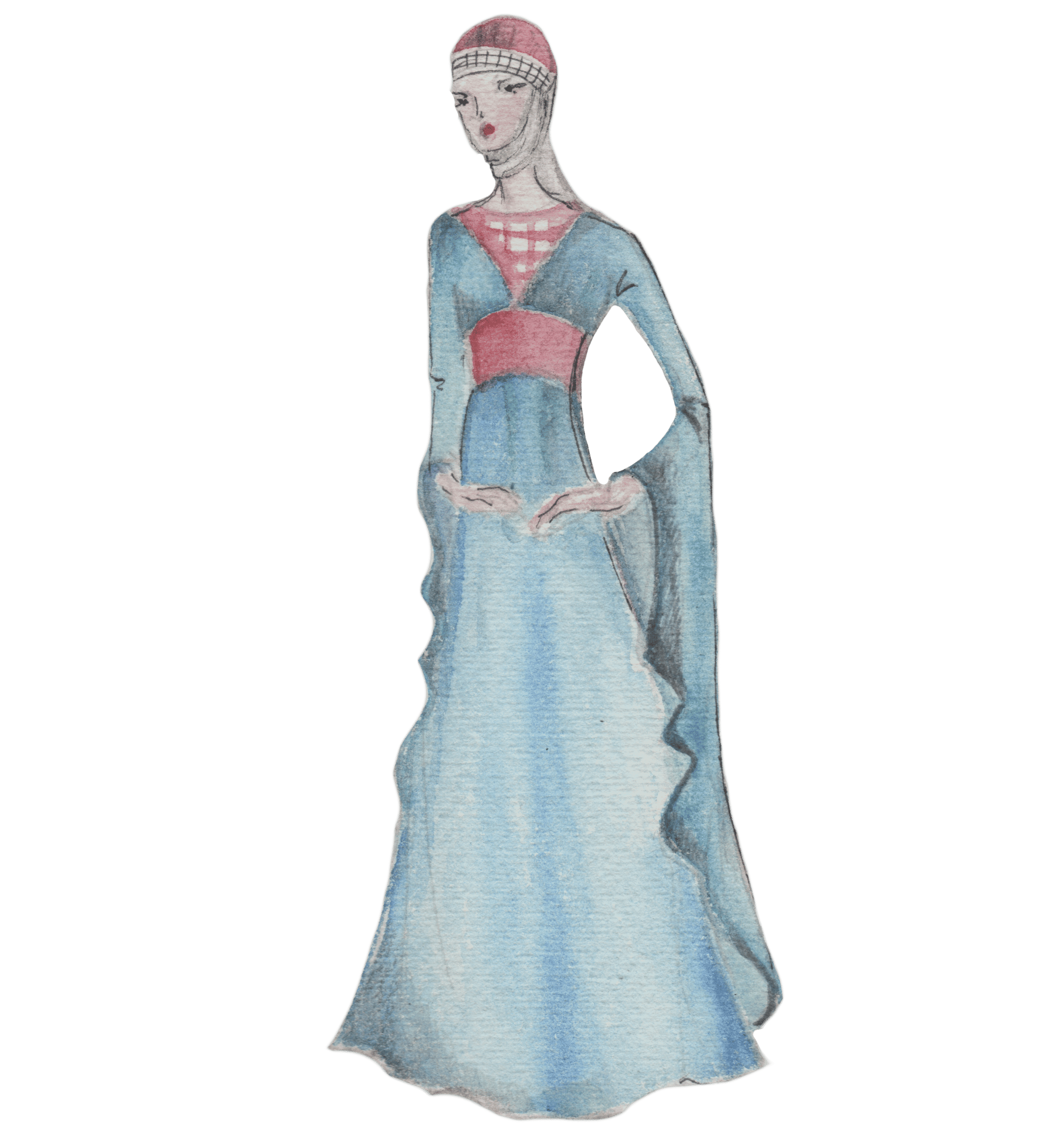
Clarice Orsini was born in Monterotondo, north of Rome, in 1452, the daughter of Jacopo Orsini. She was the wife of Lorenzo de’ Medici the Magnificent and the mother of Pope Leo X. She died of tuberculosis in 1488 and was buried with solemn funerals in the Basilica of San Lorenzo.
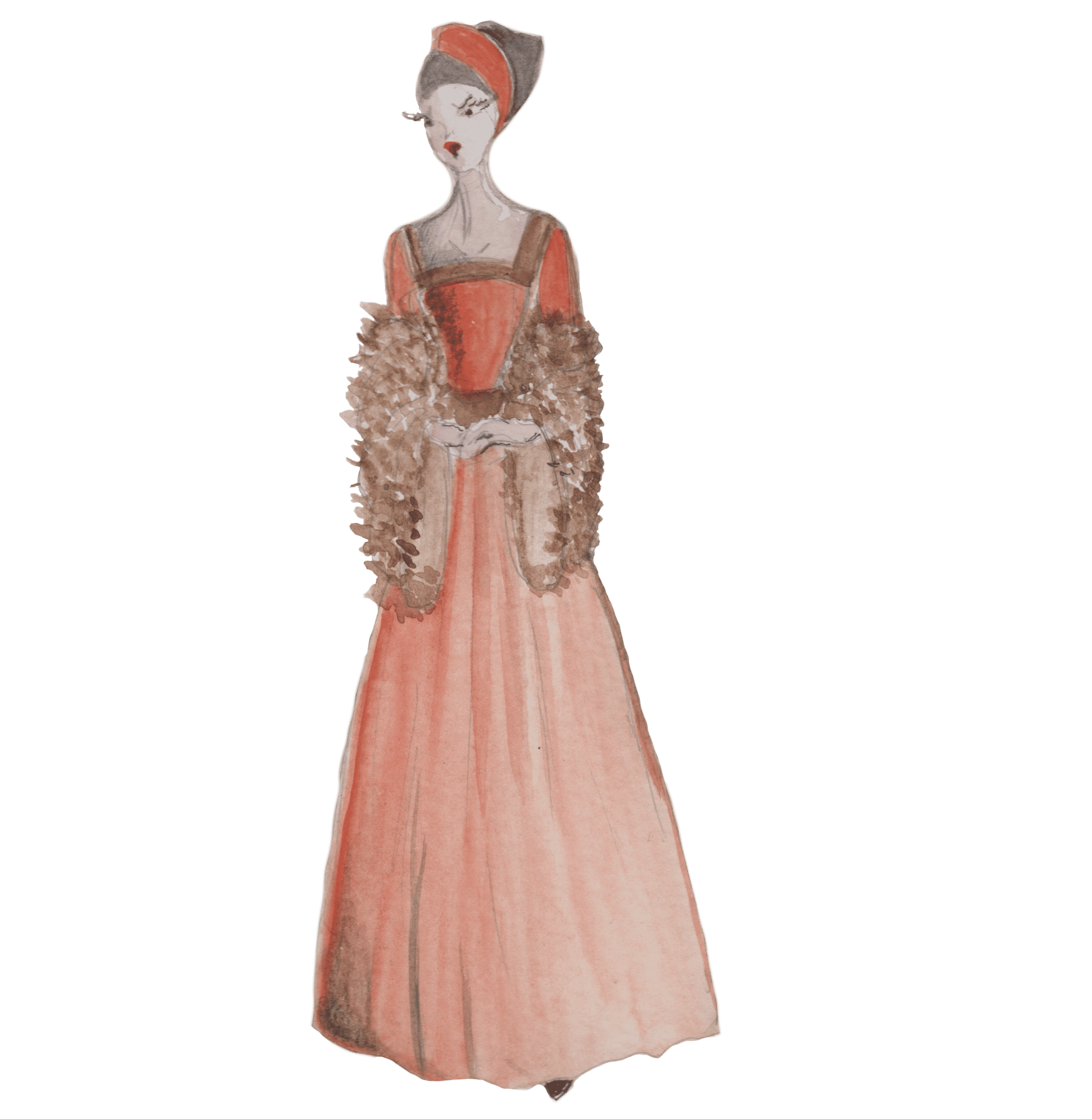
Margherita
Margherita Gonzaga was a noblewoman of the Duchy of Mantua, born in Mantua on May 23, 1564. She was the third wife of Duke Alfonso II d’Este. She was the daughter of Guglielmo Gonzaga and Eleonora of Austria, daughter of Emperor Ferdinand of Habsburg. She founded the Monastery of Saint Ursula and died in Mantua on January 6, 1618.
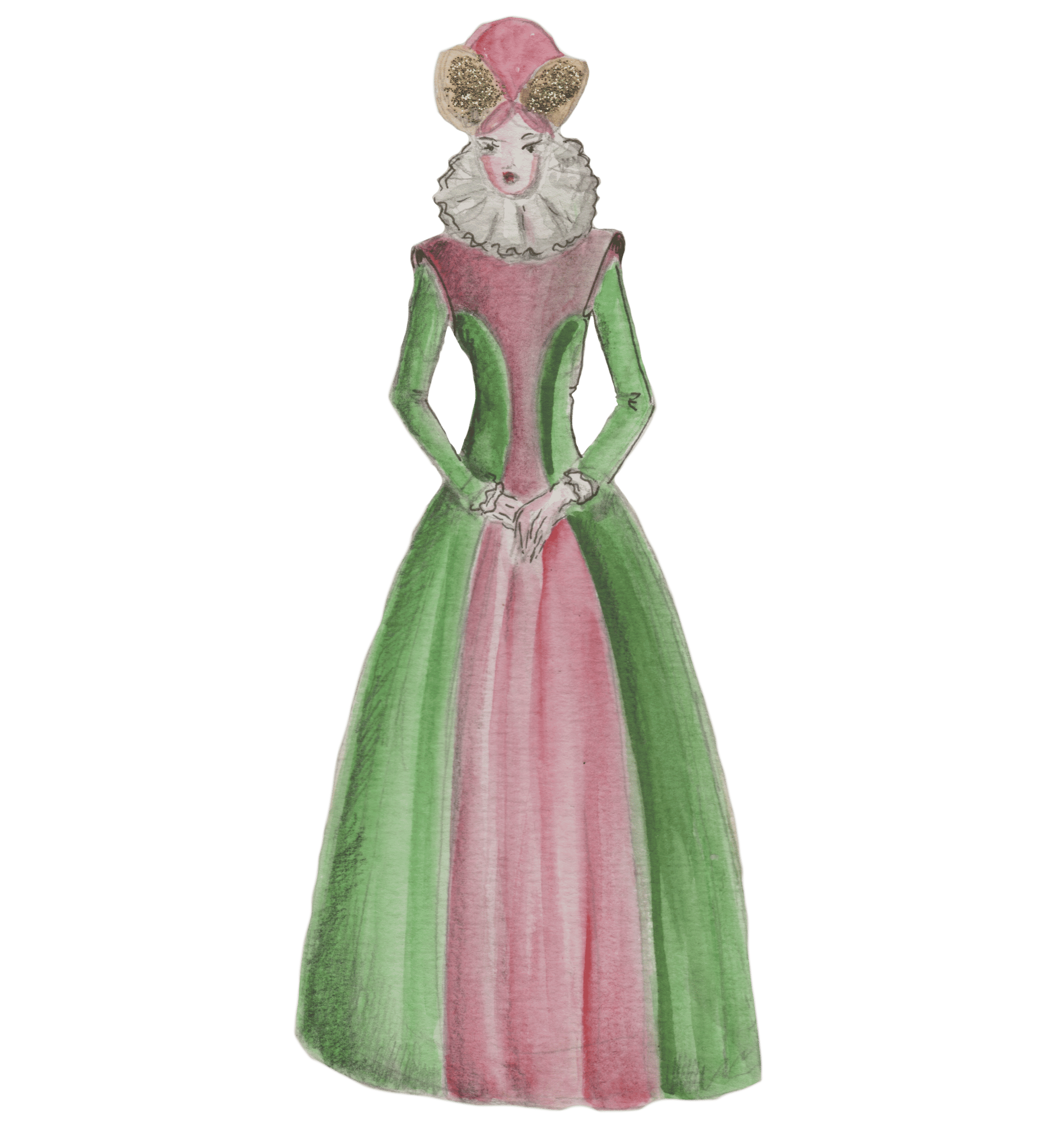
Caterina
Caterina de’ Medici Sforza is the most famous woman of the Renaissance. She was born in Milan in 1463, the illegitimate daughter of Duke Galeazzo Maria Sforza and his mistress Lucrezia Landini. At just 14 years old, she married Girolamo Riario, nephew of Pope Sixtus IV. In the spring of 1496, she met Giovanni de’ Medici, cousin of Lorenzo the Magnificent, whom she would marry. In January 1500, she was held prisoner by Cesare Borgia for a year in the prisons of Castel Sant’Angelo in Rome. She was later freed to live in Florence, where she died in 1509.
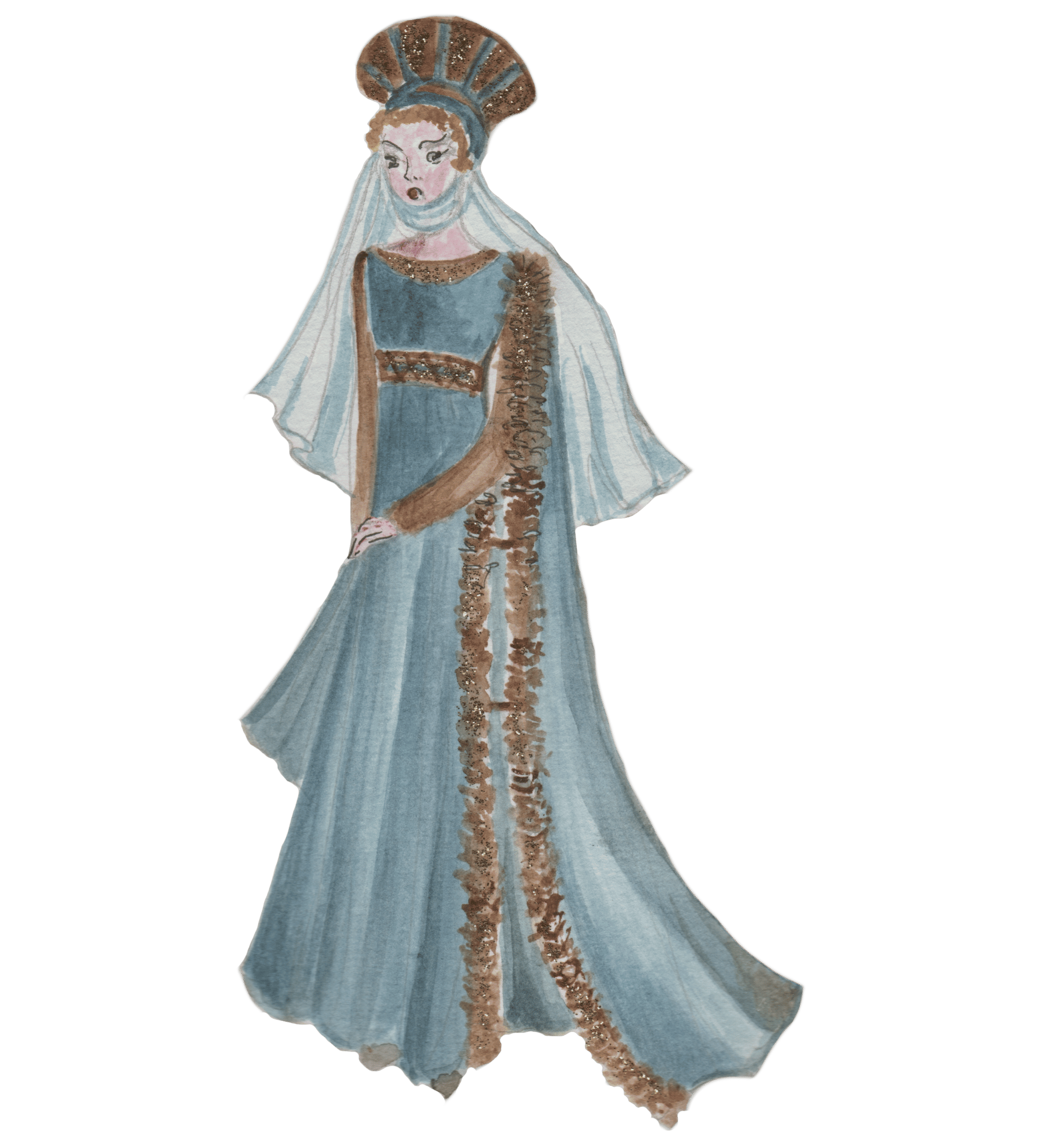
Gridonia
Gridonia Gonzaga was the daughter of Rodolfo Gonzaga, Marquis of Castiglione delle Stiviere, and Elena Aliprandi. In 1630, she was struck by the plague but survived. She died in Castiglione in 1650, and her remains are in the Basilica of Saint Aloysius Gonzaga.
Our residences in Florence and Rome welcome guests seeking authentic experiences, timeless elegance, and the warmth of personalized hospitality.
CONTACT USInfo
CIN
Contact us
Social
CIN: IT048017B4Z8YBADKG (Borgia di Firenze) | IT048017B4UMBKUUUX (Giglio Borgia) | IT058091C2FLLCCTH5 (Paradiso Borgia)
© 2026 Borgia di Firenze, Giglia srl e S. Trinita srl. All rights reserved.